Geotechnicalengineering1
MELBOURNE
HomeGround improvementVibrocompaction Design

Vibrocompaction Design for Melbourne Sands and Silty Ground

Technical studies that support your project.

LEARN MORE

Melbourne's geology is a study in contrasts. The sandy deposits along the Yarra River delta and the silty clays of the basalt plains to the west behave very differently under dynamic loads. In our experience, the key to successful vibrocompaction design in this city lies in understanding the local gradation and fines content before selecting the compaction pattern. A deep sand layer near Fishermans Bend might respond well to a single pass, while the same approach on the silty sands of the Maribyrnong valley would leave loose zones. That's why we always start with a thorough site investigation, often combining a MASW survey to map vs30/" data-interlink="1">shear wave velocity profiles with targeted test pits. This upfront work saves weeks of trial and error on site.
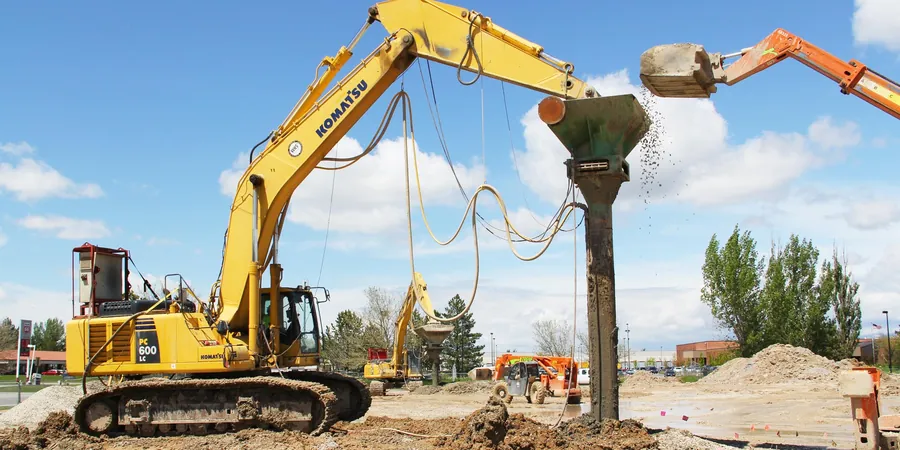
Illustrative image of Vibrocompaction design in Melbourne
A single vibrocompaction pass in clean Yarra sands can achieve relative densities above 80%; silty zones often require a tighter grid and slower probe withdrawal.

Our service areas

Methodology and scope

The design method follows the principles of AS 1726, but we adapt the spacing and energy levels based on the specific soil conditions encountered in Melbourne. For loose sand with less than 10% fines, a triangular grid at 2.5 m spacing with a probe withdrawal rate of 1.0 m/min usually achieves relative densities above 75%. When the fines content climbs above 15%—common in the older alluvial terraces—we reduce the spacing to 2.0 m and slow the withdrawal to 0.7 m/min. We also use CPT testing before and after compaction to verify density gains, and we cross-check with plate load tests where bearing capacity is critical for the foundation design. The table below summarizes our typical design parameters for Melbourne's main soil types.
Technical reference — Melbourne

Local considerations

The biggest risk we see in Melbourne vibrocompaction projects is underestimating the influence of fines content. A site in Southbank with just 12% silt can look good on a wash-sieve analysis, but the silt bridges between sand grains and resists densification. We've seen contractors run a standard pattern on what they assumed was clean sand, only to find post-compaction CPTs showing relative densities stuck at 60%. The difference between the Yarra delta sands and the deeper Brighton Group sands is real—each requires its own design. Ignoring the local fines distribution is the fastest way to end up with a foundation that settles well beyond the allowable limits.

Need a geotechnical assessment?

Reply within 24h.

Email: contact@geotechnicalengineering1.vip

Applicable standards

AS 1726-2017 Geotechnical site investigations, AS 4678-2002 Earth-retaining structures, AS/NZS 1170.0:2002 Structural design actions

Technical parameters

ParameterTypical value
Soil typeClean sand (<5% fines)
Probe spacing (triangular)2.5 - 3.0 m
Probe withdrawal rate1.0 - 1.2 m/min
Target relative density>75%
Fines content threshold10% (adjust spacing above this)
Pre/Post verificationCPT or SPT per AS 1726

Frequently asked questions

What is the typical depth range for vibrocompaction in Melbourne?

For most projects, we design vibrocompaction to treat depths between 3 m and 12 m. Deeper loose zones have been encountered in the Yarra delta, but the method becomes less efficient below 15 m due to energy dissipation.

How do I know if my site needs vibrocompaction instead of dynamic compaction?

If the loose layer is primarily sand or silty sand below the water table, vibrocompaction is usually more effective. Dynamic compaction works better for dry, coarse fills. We run a pre-design investigation with CPT and SPT to decide.

How much does a vibrocompaction design study cost in Melbourne?

The cost for a full design study, including site investigation, parameter selection, and compaction pattern specification, ranges from AU$1.970 to AU$9.040 depending on site area and soil variability.

What verification tests do you recommend after compaction?

We always recommend post-compaction CPT soundings at a rate of one per 300 m² to measure cone resistance and calculate relative density. Plate load tests are added where bearing capacity is critical for the foundation.

Can vibrocompaction be used for Melbourne's basalt clay sites?

No, vibrocompaction is not effective in cohesive soils. For the basalt clays common in the eastern suburbs, we recommend other ground improvement methods like deep soil mixing or replacement.

Location and service area

We serve projects across Melbourne.

Location and service area