Geotechnicalengineering1
MELBOURNE
HomeLaboratoryLímites de Atterberg

Atterberg Limits Testing in Melbourne

Technical studies that support your project.

LEARN MORE

Melbourne's rapid growth since the Gold Rush era has pushed development onto the expansive basaltic clays of the west and the silty alluvium of the Yarra corridor. These soils respond dramatically to moisture changes, which is why we run Atterberg limits on every clay-bearing sample before any foundation design. The liquid limit and plasticity index tell us whether a soil will shrink, swell, or hold its shape under load. Without that data, you are guessing at bearing capacity. We complement this with a sieve analysis for particle size distribution and a Proctor test to establish optimum moisture for compaction, creating a complete geotechnical baseline for your project.
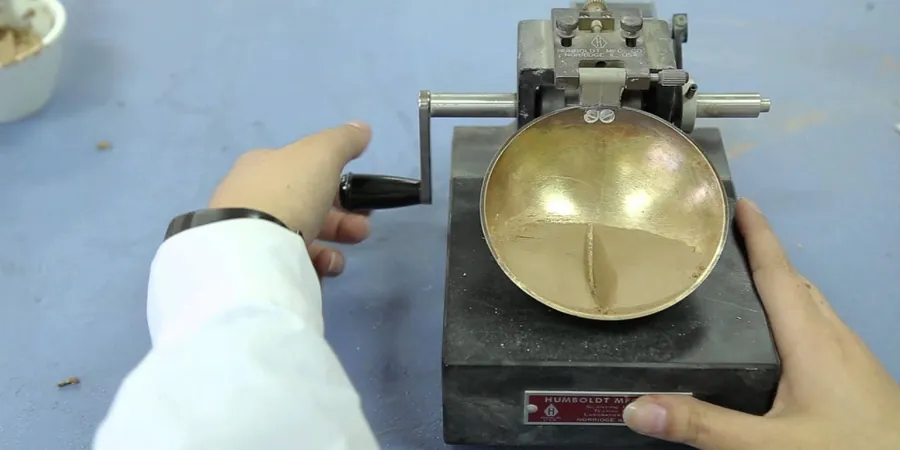
Illustrative image of Atterberg limits in Melbourne
Clays with a plasticity index above 35 in Melbourne's west typically require lime treatment before they can be used as engineered fill.

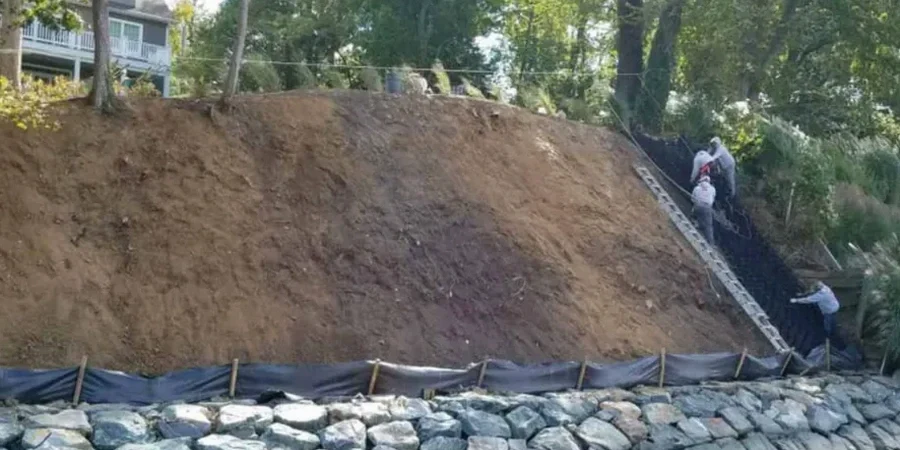
Our service areas

Methodology and scope

We recently worked on a six-storey apartment block in Footscray where the top 4 meters of clay showed a liquid limit above 70% and plasticity index of 45. That is a high-shrinkage soil. Our lab follows AS 1289.3.1.1 and AS 1726 to determine the plastic limit and shrinkage limit. For that project, we combined Atterberg limits with a consolidation test to predict settlement under the raft foundation. The whole process includes:
  • Wet sieving and oven-drying the fraction passing No. 40 sieve
  • Rolling the soil to find the plastic limit (thread method)
  • Casa-grande cup for liquid limit determination
  • Calculating plasticity index and liquidity index for classification
This data feeds directly into the soil classification (USCS or AASHTO) and helps us decide if the clay needs lime stabilization before compaction.
Technical reference — Melbourne

Local considerations

The difference between a clay in Brighton and one in Werribee is night and day. Brighton's sands over stiff clay give moderate PI values around 25, while Werribee's basaltic clays often exceed 50. That high plasticity means the soil can shrink up to 8% during dry summers and swell back just as fast in winter. If you build a slab on that without knowing the Atterberg limits, you risk differential heave and cracked walls. We have seen houses in Tarneit suffer foundation movement because the PI was never checked. The fix is simple: test the clay before you pour.

Need a geotechnical assessment?

Reply within 24h.

Email: contact@geotechnicalengineering1.vip

Applicable standards

AS 1289.3.1.1 – Standard Test Methods for Liquid Limit, Plastic Limit, and Plasticity Index of Soils, AS 1726 – Geotechnical Site Investigations (soil classification and testing), AS 4678 – Earth Retaining Structures (uses plasticity index for design parameters)

Technical parameters

ParameterTypical value
Liquid Limit (LL)45% – 85% (typical Melbourne clays)
Plastic Limit (PL)20% – 35%
Plasticity Index (PI)15 – 50
Shrinkage Limit (SL)10% – 18%
Liquidity Index (LI)0.2 – 0.8 (varies with natural moisture)
Standard ReferenceAS 1289.3.1.1 – AS 1726

Frequently asked questions

How much does Atterberg limits testing cost in Melbourne?

For a standard package including liquid limit, plastic limit, and plasticity index, you can expect a cost between AU$110 and AU$170 per sample. The price varies depending on the number of samples and whether you add shrinkage limit or linear shrinkage. We provide a fixed quote after reviewing the scope.

Why do I need Atterberg limits for a house slab in Melbourne?

Melbourne's clay soils, especially in the western suburbs, are highly reactive. The plasticity index directly determines the soil classification under AS 2870 (residential slabs and footings). Without the PI value, you cannot correctly size the slab edge beams or select the appropriate footing depth. It is not optional for reactive sites.

What is the difference between liquid limit and plastic limit?

The liquid limit is the moisture content at which the soil starts to flow like a liquid (measured with the Casagrande cup). The plastic limit is the moisture content at which the soil crumbles when rolled into a 3 mm thread. The difference between them is the plasticity index, which tells you how much the soil can change volume with moisture variation. A high PI means high shrink-swell potential.

Location and service area

We serve projects across Melbourne.

Location and service area