Geotechnicalengineering1
MELBOURNE
HomeFoundationsRaft Foundation Design

Raft Foundation Design in Melbourne – Geotechnical Data for Mat Slabs

Technical studies that support your project.

LEARN MORE

We worked on a six-storey apartment block in Brunswick where the structural engineer specified a raft foundation to spread the load over variable clay layers. Before pouring the mat slab, we ran a series of boreholes and a plate load test to confirm the modulus of subgrade reaction. That data directly shaped the slab thickness and reinforcement layout. For Melbourne sites where you have stiff clay near the surface but softer material deeper down, the raft becomes the logical choice because it bridges those weak spots. Our job is to give the design team the numbers they need for settlement and bearing capacity.
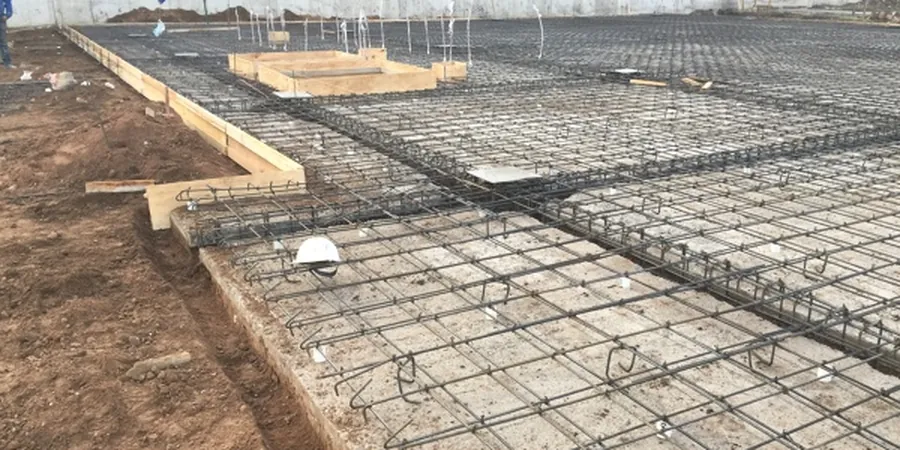
Illustrative image of Raft/mat foundation design in Melbourne
A raft foundation in Melbourne typically requires a minimum of three boreholes per footprint to capture lateral variability in clay stiffness.

Our service areas

Methodology and scope

Melbourne sits on a complex mix of Quaternary basalts, Silurian mudstones, and recent alluvial deposits along the Yarra River. About 35% of the metropolitan area has expansive clay that can lift a slab foundation if not properly designed. For a raft foundation to work here, we need lab data on swelling potential and field data on stiffness. That is why we always combine consolidation testing with an SPT profile to capture both short-term and long-term behaviour. The main parameters we deliver for raft design include:
  • Allowable bearing capacity at serviceability limit state
  • Modulus of subgrade reaction (k-value) from plate-load tests
  • Swelling pressure and shrinkage index for reactive soils
  • Estimated differential settlement under full load
Each value is referenced against AS 4678 and the local council guidelines for residential and commercial slabs.
Technical reference — Melbourne

Local considerations

Melbourne's climate swings between wet winters and dry summers. That seasonal moisture change drives shrinkage and swelling cycles in the clay soils that underlie many suburbs. A raft foundation designed with dry-season parameters alone may crack when the clays rehydrate. We run cyclic swell-shrink tests on undisturbed samples to quantify the movement range. On sites near the bay or along creek corridors, we also check for soft compressible layers that could produce differential settlement. The combination of reactive clay and variable groundwater makes a thorough site investigation non-negotiable.

Need a geotechnical assessment?

Reply within 24h.

Email: contact@geotechnicalengineering1.vip

Applicable standards

AS 4678-2002 (Earth-retaining structures – design and construction), AS 2870-2011 (Residential slabs and footings), AS 1289.6.4.1 (Soil strength and consolidation tests)

Technical parameters

ParameterTypical value
Allowable bearing capacity (SLS)80-250 kPa
Modulus of subgrade reaction (k)15-60 MN/m³
Swelling pressure (reactive clay)50-200 kPa
Estimated total settlement15-50 mm
Differential settlement ratio1:500 to 1:1000
Depth to stiff layer (below slab)1.5-6.0 m

Frequently asked questions

What is the typical cost range for a geotechnical investigation supporting raft foundation design in Melbourne?

For a standard residential raft on a single block, the investigation cost ranges between AU$1.820 and AU$3.200 depending on the number of boreholes and lab tests. Larger commercial rafts with deeper borings can go up to AU$5.790. We provide a fixed quote after reviewing the site plan and structural loads.

How many boreholes are needed for a raft foundation design in Melbourne clay soils?

For a typical house slab we recommend at least three boreholes to capture the lateral variability of clay stiffness. On irregular or steep sites we add a fourth borehole. Each borehole is logged in accordance with AS 1726 and sampled for lab testing.

What is the difference between a raft foundation and a strip footing on reactive clay?

A raft foundation acts as a single stiff slab that distributes loads uniformly and resists differential movements caused by clay swelling or shrinkage. Strip footings concentrate load in narrow strips and are more prone to cracking when the ground moves. In Melbourne's reactive clay suburbs, raft slabs are the standard recommendation under AS 2870.

Location and service area

We serve projects across Melbourne.

Location and service area