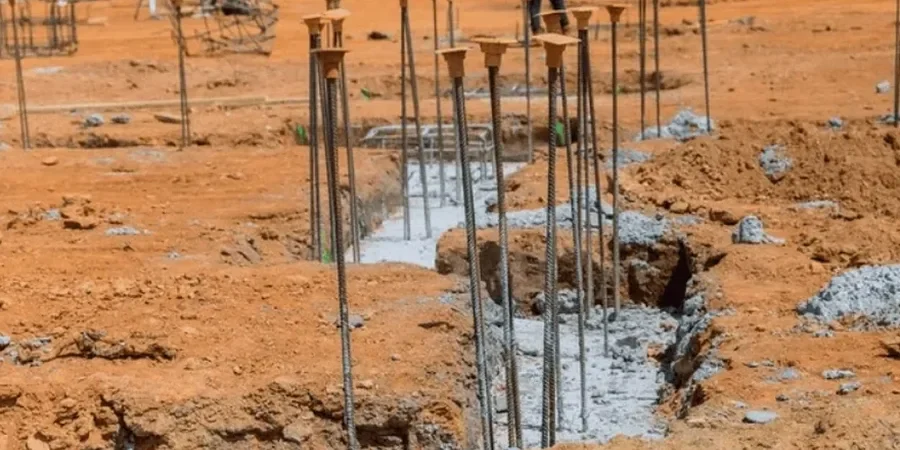
Foundations are the critical interface between a structure and the ground it stands on, and in Melbourne, getting this interface right is a matter of both safety and longevity. The city's dynamic growth—from high-rise towers in Southbank to sprawling residential developments in the western growth corridors—demands foundation solutions that account for vastly different ground conditions. A thorough approach to foundation engineering encompasses everything from initial site investigation to the detailed design of elements that will support the entire building load. Without a solid foundation, even the most well-designed superstructure is at risk of differential settlement, cracking, or catastrophic failure. This category brings together the essential services that assess ground conditions and deliver engineered solutions, ensuring every project starts on solid ground.
Melbourne's geology is famously complex, a direct legacy of its volcanic and sedimentary past. The western suburbs are dominated by the Newer Volcanics, a sequence of basalt flows that have weathered into highly reactive clay soils. These clays are notorious for significant volume changes with seasonal moisture variation, leading to ground movement that can tear conventional footings apart. In contrast, the eastern and southeastern suburbs are underlain by older Silurian and Devonian sedimentary rocks, often covered by sands and gravels of the Brighton Group. The Yarra Delta, encompassing the CBD, Docklands, and Port Melbourne, presents arguably the most challenging conditions: deep deposits of soft, compressible Coode Island Silt up to 30 metres thick. Understanding this geological mosaic is the first step in any foundation project, as a solution that works in Werribee may be entirely inappropriate for Kew. For sites where ground movement is a primary concern, a detailed collapsible soil evaluation is often the starting point.
The regulatory framework governing foundation design in Australia is robust and directly applicable to all Melbourne projects. The National Construction Code (NCC) sets the overarching performance requirements, which are then satisfied through compliance with Australian Standards. The key standard is AS 2870-2011 'Residential slabs and footings', which provides the methodology for classifying sites based on soil reactivity and designing appropriate footing systems for houses and low-rise buildings. For larger commercial and infrastructure projects, AS 2159-2009 'Piling – Design and installation' governs the structural and geotechnical design of piled foundations. These standards mandate specific investigation depths, load testing procedures, and design factors to ensure long-term performance. Adherence to these standards is not optional; it is the legal benchmark for professional practice and a critical safeguard against structural defects.
The types of projects that require specialist foundation input are as diverse as Melbourne itself. A single-storey home on a reactive clay site in Tarneit will typically need a stiffened raft slab or a suspended floor on deep piers, making a precise shallow foundation design or a targeted raft/mat foundation design essential. A multi-storey apartment building on the soft silts of Fishermans Bend will almost certainly require a deep foundation system, such as bored piles driven to a competent bearing stratum, which falls under the scope of a comprehensive pile foundation design. For structures with lower loads but difficult access, or for underpinning existing buildings, micropile design offers a versatile and minimally invasive solution. In every case, the foundational step is a rigorous bearing capacity analysis to confirm that the chosen system can safely support the intended loads without exceeding the ground's ultimate strength or causing excessive settlement. From bridges and retaining walls to industrial warehouses, a site-specific foundation strategy is the non-negotiable first step in construction.
Melbourne's key soil types include highly reactive basaltic clays in the west, which swell and shrink with moisture changes, and soft, compressible Coode Island Silt in the Yarra Delta area. Eastern suburbs often feature sands and gravels over sedimentary rock. These varying conditions demand site-specific foundation solutions to manage ground movement and ensure stability.
A deep foundation is typically required when shallow soils are too weak, compressible, or reactive to safely support building loads. This is common in Melbourne's Docklands area with its deep silts, or on severely reactive clay sites. A geotechnical investigation and bearing capacity analysis will determine the appropriate foundation depth and type.
AS 2870-2011 'Residential slabs and footings' is the primary standard for classifying sites and designing footings for houses and low-rise structures. It outlines site classification based on soil reactivity and provides standard footing designs to accommodate expected ground movement, ensuring structural integrity.
The most significant risk is differential settlement, where part of a building moves more than another, causing structural cracks and damage. In Melbourne, this is often driven by reactive clay movement or consolidation of soft silts. Inadequate design can lead to costly remedial underpinning and significantly reduce a property's value.