Geotechnicalengineering1
MELBOURNE
HomeGround improvementRemediación de suelos contaminados

Contaminated Soil Remediation in Melbourne

Technical studies that support your project.

LEARN MORE

Our geotechnical rigs and excavators arrive on Melbourne sites with direct-push samplers and dual-tube systems rated for depths up to 18 meters. For volatile contaminants we deploy En Core samplers and zero-headspace extraction devices on the same afternoon. The team starts with a site history review and a preliminary conceptual model before mobilizing any equipment. This phased approach avoids unnecessary excavation and keeps the investigation focused on the actual contamination plume. Combining on-site screening with laboratory validation under AS 4482.1 we deliver defensible data for regulators and contractors alike.
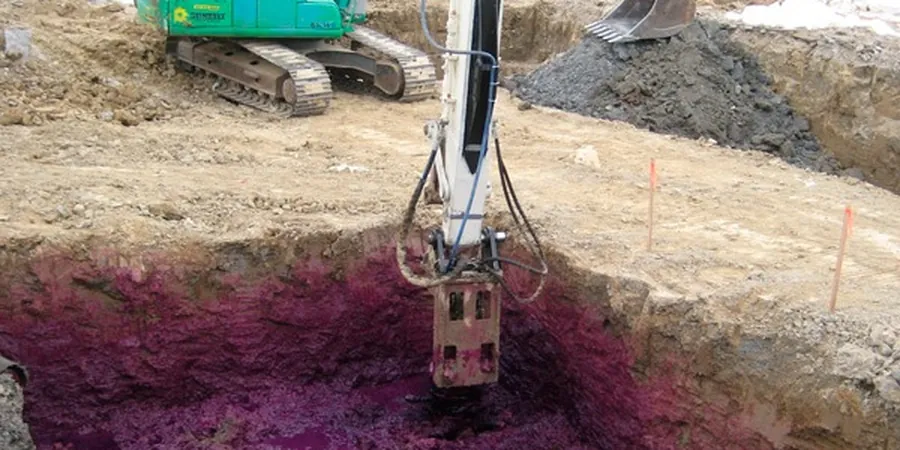
Illustrative image of Contaminated soil remediation in Melbourne
Direct-push sampling to 18 m depth with En Core devices — defensible data for regulators under AS 4482.1 and EPA Victoria guidelines.

Our service areas

Methodology and scope

Melbourne sits on a mix of Quaternary alluvium, Silurian mudstone and basalt flows. The Yarra River corridor alone holds up to 8 meters of soft clay and peat with elevated heavy metals from 150 years of industrial use. In the inner suburbs we regularly encounter BTEX and PAH plumes from former gasworks and dry-cleaning operations. Before planning remediation pathways we run a calicatas exploratorias to log stratigraphy and collect disturbed samples. For dense basalt profiles we supplement with ensayo SPT to correlate penetration resistance with contaminant migration paths. This combination of visual logging and dynamic probing gives us a solid three-dimensional picture of the contamination distribution.
Technical reference — Melbourne

Local considerations

A former paint factory in Brunswick West had a 2-meter clay cap overlying a basalt bedrock fracture zone. The investigation had to reach 6 meters to intercept the plume. Our team used a direct-push rig with continuous core retrieval. Missing that fracture zone would have led to an incomplete remediation design — the contractor would have backfilled clean soil on top of residual contamination. The risk of regulatory non-compliance and future liability was real. We mapped the plume boundaries at 0.5 m vertical intervals and confirmed the results with NATA-accredited lab analysis.

Need a geotechnical assessment?

Reply within 24h.

Email: contact@geotechnicalengineering1.vip

Applicable standards

AS 4482.1:2019 — Guide to the investigation and sampling of potentially contaminated soil, AS 4439.1:2019 — Wastes, sediments and contaminated soils, EPA Victoria IWRG 701 — Soil sampling guidelines, NEPM 2013 (Schedule B2) — Guideline on site characterisation

Technical parameters

ParameterTypical value
Sampling methodDirect-push (Geoprobe) / Hollow-stem auger
Maximum depth18 m (direct-push), 30 m (HSA)
Contaminants targetedBTEX, PAH, TRH, heavy metals, OCP, PCB
Laboratory turnaround5–10 business days (NATA accredited)
GuidelineAS 4482.1, EPA Victoria IWRG 701
Field screeningPID, XRF, immunoassay kits

Frequently asked questions

What regulations apply to contaminated soil remediation in Melbourne?

The primary framework is the National Environment Protection Measure (NEPM) 2013, specifically Schedule B2 for site characterisation. Victoria has its own EPA guidelines under the Environment Protection Act 2017, including the Industrial Waste Resource Guidelines (IWRG 701) for soil sampling and the Waste Disposal Categories (EPA Victoria 2020). AS 4482.1:2019 governs sampling methodology.

How much does contaminated soil remediation cost in Melbourne?

Costs vary widely depending on contaminant type, volume, depth, and disposal route. For a typical small-scale industrial site (500 m3 of contaminated soil) expect between AU$5,350 and AU$18,350 including investigation, excavation, treatment, and validation. Larger plumes or projects requiring in-situ injection can exceed AU$50,000.

What is the difference between in-situ and ex-situ remediation?

In-situ remediation treats the soil in place, for example by injecting chemical oxidants or extracting soil vapour through wells. Ex-situ remediation involves excavating the contaminated soil and treating it above ground — through biopiles, thermal desorption, or off-site disposal. In-situ avoids excavation costs but requires good soil permeability. Ex-situ is more expensive but works in low-permeability clays.

How long does a remediation project take in Melbourne?

Typical project timelines range from 3 to 12 months. Investigation and sampling take 2–4 weeks. Regulatory review (EPA Victoria) can add 4–8 weeks. Treatment itself depends on the method: in-situ chemical oxidation may show results in 2–6 months, while ex-situ biopiles require 3–6 months. Validation sampling and reporting add another 4–6 weeks.

Location and service area

We serve projects across Melbourne.

Location and service area