Geotechnicalengineering1
MELBOURNE
HomeLaboratorySoil Mechanics Study

Soil Mechanics Study in Melbourne – Geotechnical Testing for Safe Foundations

Technical studies that support your project.

LEARN MORE

Many builders in Melbourne assume the soil is uniform across the metro area. That mistake leads to cracked slabs, differential settlement, and costly remedial work. The volcanic soils in the west behave nothing like the alluvial clays along the Yarra River. A proper soil mechanics study identifies these variations before you pour a single cubic meter of concrete. We combine field work with lab testing to classify the ground correctly. This includes evaluating bearing capacity, shrink-swell potential, and drainage conditions. For sites with deep fill or soft clay, we recommend a MASW-Vs30 survey to map stiffness profiles without drilling every meter. The data directly informs foundation design under AS 2870.
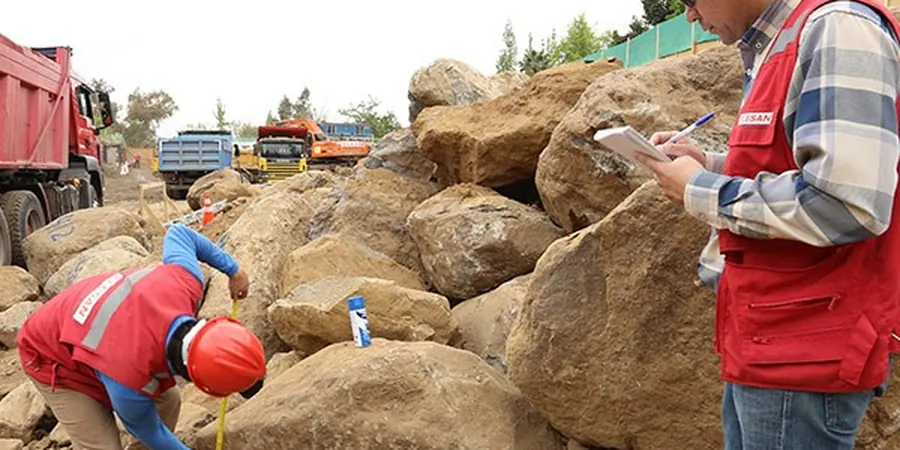
Illustrative image of Soil mechanics study in Melbourne
A proper soil mechanics study identifies ground variations before you pour a single cubic meter of concrete.
Our service areas

Methodology and scope

Our soil mechanics study follows AS 1726:2017 for geotechnical site investigations and AS 4678:2002 for earth retaining structures. In Melbourne, the presence of basalt rock near the surface in areas like Footscray requires careful excavation planning, while the Coode Island silt demands deep foundation solutions. We execute the following sequence: first, test pits or boreholes for visual classification; second, in-situ testing with SPT and vane shear; third, laboratory tests including Atterberg limits, particle size distribution, and triaxial compression.
  • SPT per AS 1289.6.3.1: N-values for bearing capacity and liquefaction screening
  • Grain size analysis per AS 1289.3.6.1
  • Consolidation test per AS 1289.6.6.1 for settlement prediction
For roads and pavements, we integrate CBR testing to design subgrade thickness. Each parameter is cross-checked against the local geological map published by the Geological Survey of Victoria.
Technical reference — Melbourne

Local considerations

Compare a site in Brighton with one in Werribee. Brighton sits on sandy soils with good drainage and moderate bearing capacity. Werribee has expansive clay that moves over a meter during drought. Without a soil mechanics study, you design for Brighton conditions and the Werribee slab cracks within two years. The risk multiplies when you factor in the Melbourne seismic zone (AS 1170.4) – soft soils amplify ground motion. We map these contrasts using falla de taludes analysis for cut slopes and respuesta sismica modeling for site class determination. Ignoring local variability is the fastest way to a structural failure.

Need a geotechnical assessment?

Reply within 24h.

Email: contact@geotechnicalengineering1.vip

Explanatory video

Applicable standards

AS 1726:2017 – Geotechnical site investigations, AS 1289 series – Methods of testing soils for engineering purposes, AS 1289.6.3.1 – Standard test method for Standard Penetration Test (SPT), AS 2870:2011 – Residential slabs and footings

Technical parameters

ParameterTypical value
SPT N-value (blows/300mm)4 – 50+ (depends on lithology)
Liquid Limit (LL) – Atterberg35 – 75% (typical for Yarra clays)
Plasticity Index (PI)15 – 45%
Fines content (% passing 75 µm)40 – 85%
Undrained shear strength (cu) – triaxial20 – 120 kPa
Coefficient of consolidation (cv)1 – 10 m²/year
Friction angle (φ') – drained25 – 38°

Frequently asked questions

How much does a soil mechanics study cost in Melbourne?

The typical range for a residential block is between AU$5,010 and AU$7,740. This includes drilling, standard lab tests, and a geotechnical report. Larger commercial sites with multiple boreholes cost more depending on depth and number of tests.

What is the difference between SPT and CPT in soil classification?

SPT (Standard Penetration Test) measures resistance via split-spoon sampling and provides a disturbed sample. CPT (Cone Penetration Test) records continuous tip resistance and pore pressure without sampling. In Melbourne, SPT is the preferred method for stiff clays and basalt layers, while CPT works well in soft alluvial deposits like Coode Island silt.

Do I need a soil mechanics study for a single-story house in Melbourne?

Yes. AS 2870 requires a site classification for all residential slabs. Even a single-story house on reactive clay can suffer differential movement. The study determines the foundation class (A, S, M, H1, H2, or E) and prescribes footing depth, slab reinforcement, and any required piering.

Location and service area

We serve projects across Melbourne.

Location and service area