Geotechnicalengineering1
MELBOURNE
HomeFoundationsShallow Foundation Design

Shallow Foundation Design in Melbourne – Geotechnical Insight for Safer Construction

Technical studies that support your project.

LEARN MORE

Melbourne sits on a varied geological patchwork. In the inner suburbs, you often hit the notorious Coode Island Silt – a soft, compressible estuarine clay that can reach 30 metres deep. Out towards the east and north, the ground changes to basalt-derived clay and sandy terraces from the Yarra River system. For any shallow foundation design in Melbourne, understanding that local variability is the first step. We start every project with targeted boreholes and in-situ testing, typically combining a test pit investigation for shallow profiles with SPTs to capture strength at depth. That dual approach gives us the data we need to propose safe, economical footing sizes without over-designing.
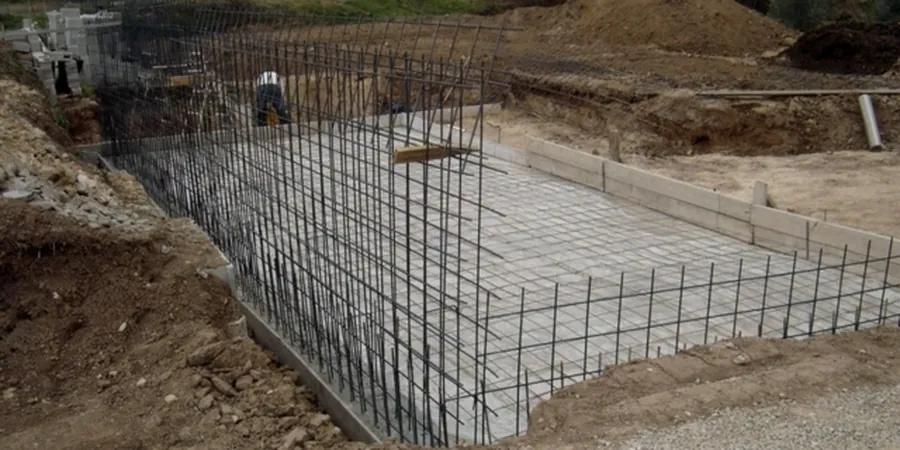
Illustrative image of Shallow foundation design in Melbourne
For Melbourne's basalt clays, seasonal moisture change can shift bearing capacity by 30% – design for that movement or repair cracks later.

Our service areas

Methodology and scope

What we see most often in Melbourne is that builders underestimate the swelling potential of the basalt clays in the eastern suburbs. These soils can shrink and crack during dry summers, then heave in wet winters. A proper shallow foundation design accounts for that seasonal movement by setting founding depths below the active zone and specifying stiffened rafts or waffle slabs where needed. We also run consolidation tests on the soft clays from the Docklands and Fishermans Bend areas, where long-term creep can cause differential settlement. To refine our bearing capacity models, we cross-check results with plate load tests on site and correlate them with laboratory triaxial data. This integrated workflow ensures the footing geometry matches the real ground behaviour, not just a textbook value.
Technical reference — Melbourne

Local considerations

The biggest mistake we see on Melbourne projects is skipping the site-specific geotechnical assessment and assuming a standard 300 kPa bearing capacity will work everywhere. That assumption fails badly on Coode Island Silt, where actual allowable bearing can drop below 80 kPa. Without proper testing, you get excessive differential settlement, cracked slabs, and doors that jam. We've also seen builders pour strip footings too shallow in the basalt clays, only to have the slab lift after the first wet winter. A shallow foundation design tailored to Melbourne's ground conditions is the only way to avoid those expensive call-backs.

Need a geotechnical assessment?

Reply within 24h.

Email: contact@geotechnicalengineering1.vip

Applicable standards

AS 1726 – Geotechnical site investigations, AS 4678 – Earth-retaining structures, AS/NZS 1170.0 – Structural design actions, NCC 2022 – Volume 2 (Housing Provisions)

Technical parameters

ParameterTypical value
Allowable bearing capacity (spread footings)100 – 300 kPa depending on soil type
Minimum foundation depth (expansive soils)0.8 – 1.2 m below natural surface
Estimated total settlement (service limit)≤ 25 mm for typical structures
Differential settlement tolerance≤ 15 mm between adjacent columns
Factor of safety against bearing failure2.5 – 3.0 (AS 4678 guidance)

Frequently asked questions

What soil types in Melbourne most affect shallow foundation design?

The three main challenges are Coode Island Silt (soft estuarine clay with low bearing capacity), basalt-derived clays in the east (high reactivity, shrink-swell potential), and sandy terraces along the Yarra (loose sands prone to liquefaction in seismic events). Each requires a different design approach.

How much does a shallow foundation design report cost in Melbourne?

For a typical residential project, expect between AU$3,030 and AU$4,520 for a full geotechnical investigation including boreholes, laboratory testing, and a design report with bearing capacity and settlement analysis. Larger commercial sites with multiple footings run higher due to additional boreholes.

What is the minimum depth for a shallow foundation on reactive clay?

For Melbourne's reactive clays, AS 2870 recommends founding at least 0.8 metres below natural surface, and often 1.0 – 1.2 metres in highly reactive zones. Depth must also account for the active zone depth determined from soil suction testing.

Location and service area

We serve projects across Melbourne.

Location and service area