Geotechnicalengineering1
MELBOURNE
HomeSlopes & WallsDiseño con geoceldas

Geocell Design for Melbourne's Variable Ground Conditions

Technical studies that support your project.

LEARN MORE

Melbourne's rapid expansion into outer growth corridors like Werribee and Cranbourne has pushed development onto former floodplains and agricultural land. The city's geology is far from uniform, with Quaternary basalt flows covering the west, while eastern suburbs sit on deep Silurian mudstone profiles. This patchwork of stiff clays, sandy alluvium, and compressible silts demands a solid geocell design that can accommodate differential settlement and lateral spreading. In our experience, the most successful projects blend cellular confinement systems with proper subgrade evaluation, often coupling the geocell layout with a thorough study of infiltration rates to manage stormwater beneath the pavement structure.
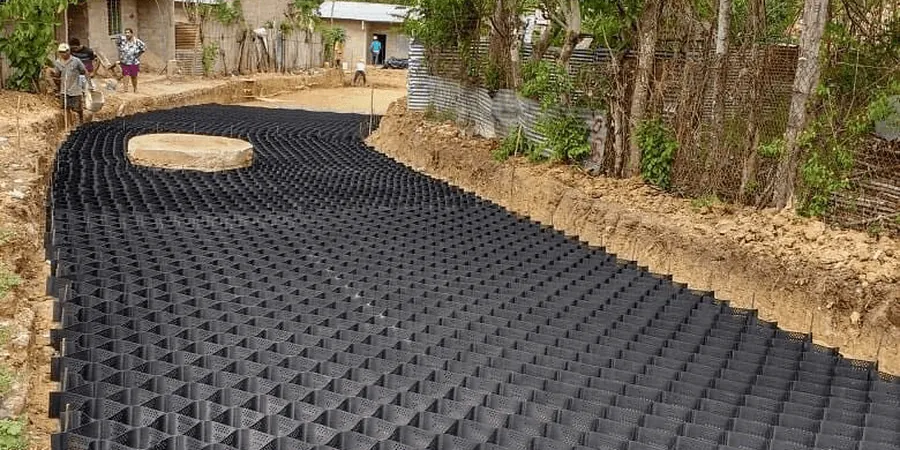
Illustrative image of Geocell design in Melbourne
Geocell design in Melbourne's swelling clays requires seasonal moisture modelling; a 150 mm cell depth on low CBR subgrades is the typical starting point.
Our service areas

Methodology and scope

The temperate climate of Melbourne brings wet winters and dry summers, which means the active clay zone can shrink and swell significantly across the year. Geocell design in this region must account for seasonal moisture changes that affect subgrade strength. A well-designed system typically uses perforated geocells to allow lateral drainage, preventing pore pressure buildup under the pavement. For road and hardstand applications, we follow the Austroads pavement design guide and recommend a minimum cell depth of 150 mm on low CBR subgrades.
  • Cell material: HDPE or PP with UV stabilisation for long-term exposure
  • Fill specification: poorly-graded gravel or crushed rock, compacted to 98% standard Proctor
  • Connection method: inline ultrasonic welded seams for joint integrity
We also integrate geotextile separation layers beneath the cells to prevent fines migration into the aggregate fill.
Technical reference — Melbourne

Local considerations

The Yarra River corridor and parts of the Mornington Peninsula present a specific hazard: deep layers of soft alluvial clay and peat that can undergo consolidation settlement of up to 300 mm under fill loads. A geocell design that ignores long-term creep in these organic soils risks pavement cracking and edge rutting within five years. We have also encountered uncontrolled fill from the 1970s in industrial zones like Altona, where buried debris creates void migration that a standard geocell cannot bridge. In these cases, the design must incorporate a geogrid base layer or transition to a reinforced soil foundation.

Need a geotechnical assessment?

Reply within 24h.

Email: contact@geotechnicalengineering1.vip

Applicable standards

AS 4678-2002 Earth-retaining structures (applied to steepened geocell slopes), Austroads Guide to Pavement Technology Part 2: Pavement Structural Design, AS 1289 Standard Test Method for Geocell Tensile Strength

Technical parameters

ParameterTypical value
Cell depth (mm)100–200 depending on traffic load
Weld seam strength (kN/m)≥ 20 per AS 1289
Fill aggregate size (mm)20–40 crushed rock
Subgrade CBR threshold≥ 2% for geocell application
Design life (years)20–40 with UV-stabilised HDPE
Connection overlap (mm)≥ 300 at panel joints

Frequently asked questions

How does geocell design differ for Melbourne's basalt clay versus sandy alluvium?

On basalt clay, the design focuses on resisting volumetric changes from wet-dry cycles; we specify deeper cells (200 mm) and a coarse angular fill to lock the system. For sandy alluvium, the main concern is bearing capacity and rutting, so a shallower cell (100-150 mm) with a well-graded gravel fill is typical, often combined with a separation geotextile to prevent subgrade pumping.

What is the typical cost range for a geocell design package in Melbourne?

For a standard pavement or slope project, the design and documentation package ranges between AU$1.130 and AU$4.190 depending on site complexity, the number of cross-sections, and whether a full subgrade investigation is included. Site-specific factors like access constraints or deep fill can increase the scope.

Can geocell design be used on slopes steeper than 1:1 in Melbourne's clay soils?

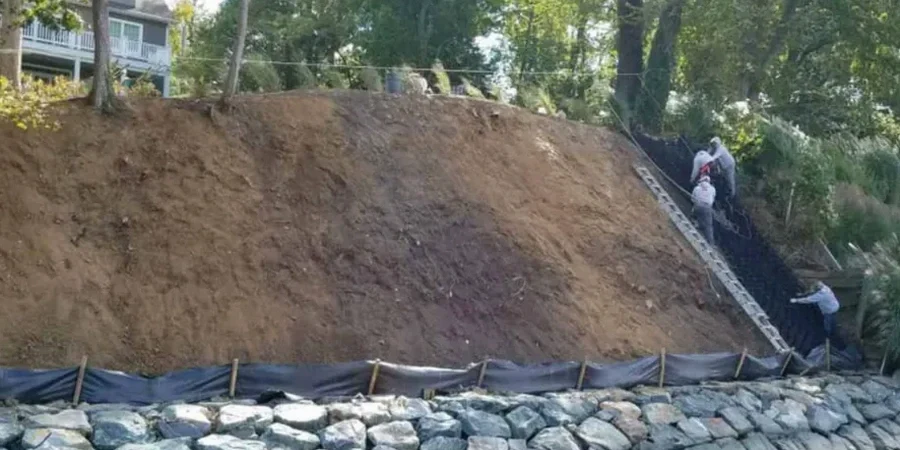
Yes, but only with proper toe restraint and internal reinforcement. On basalt clay slopes steeper than 45 degrees, we add a geogrid anchor extending 2 m into the stable backfill and use a vegetated infill to manage surface erosion. A slope stability analysis per AS 4678 is mandatory before proceeding.

Location and service area

We serve projects across Melbourne.

Location and service area