Geotechnicalengineering1
MELBOURNE
HomeSlopes & WallsRetaining Wall Design

Retaining Wall Design in Melbourne – Geotechnical Parameters & Site Assessment

Technical studies that support your project.

LEARN MORE

Melbourne sits on a mix of Quaternary basalts, Tertiary sediments, and recent alluvial deposits. The city's average elevation is only 31 m above sea level, but the Yarra River corridor and inner suburbs like Richmond and Abbotsford have deep soft clays and sands. For retaining wall design in Melbourne, the first step is classifying the soil type and its engineering behavior. We run Atterberg limits and sieve analysis to determine plasticity and particle size. These parameters feed directly into the corte directo test, which gives us drained and undrained shear strength values needed for active and passive earth pressure calculations. Without these numbers, a wall design is just a guess.
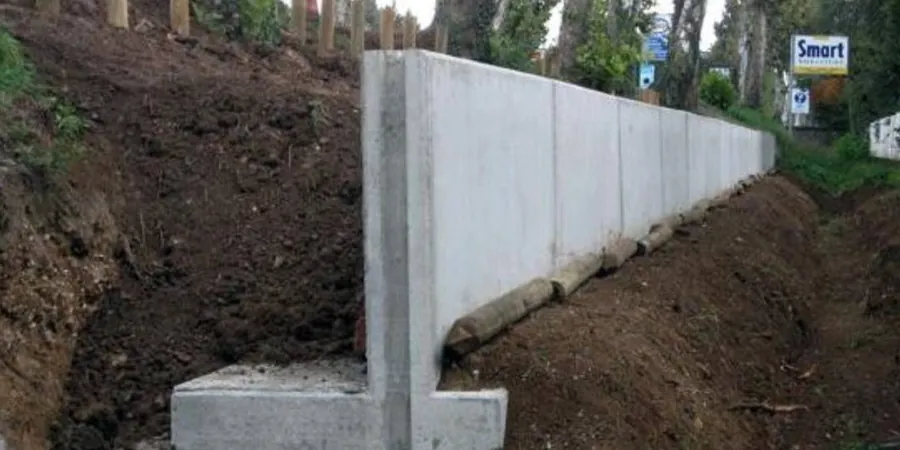
Illustrative image of Retaining wall design in Melbourne
For retaining wall design in Melbourne, drained shear strength from triaxial tests is the most reliable input for long‑term earth pressure calculations.
Our service areas

Methodology and scope

Our laboratory uses a Wykeham Farrance direct shear apparatus and a triaxial system with digital load cells. The equipment is calibrated annually under ISO 17025 accreditation. For retaining wall design in Melbourne, we measure cohesion and friction angle on undisturbed tube samples or remolded specimens. The triaxial test runs at confining pressures that mimic in‑situ conditions — typically 50, 100, and 200 kPa for shallow walls. We also run compaction tests (AS 1289.5.1.1) to know the fill density behind the wall. If the site has granular backfill, we correlate the friction angle with the ensayo SPT blow count. This approach gives the design engineer a reliable set of parameters to calculate sliding, overturning, and bearing capacity.
Technical reference — Melbourne

Local considerations

AS 4678‑2002 (Earth‑retaining structures) requires the designer to account for both short‑term undrained and long‑term drained conditions. In Melbourne, the risk of hydrostatic pressure behind walls is high due to the seasonal water table rise after winter rains. If the soil is a low‑plasticity clay (CL) or silty sand (SM), pore pressure can build quickly and reduce effective stress. We test for permeability and consolidation to estimate drainage conditions. Ignoring these parameters can lead to wall rotation or collapse. A proper ensayo de infiltración on site helps confirm drainage assumptions before final design.

Need a geotechnical assessment?

Reply within 24h.

Email: contact@geotechnicalengineering1.vip

Applicable standards

AS 4678‑2002 Earth‑retaining structures, AS 1726‑2017 Geotechnical site investigations, AS 1289.3.6.1 – Direct shear test method

Technical parameters

ParameterTypical value
Peak friction angle (φ')28° – 45° (clay to dense sand)
Cohesion (c')0 – 25 kPa (drained); up to 60 kPa (undrained)
Unit weight (γ)16 – 22 kN/m³
Atterberg limits (LL, PL, PI)LL 25–80, PI 5–45
Compaction max dry density (MDD)1.6 – 2.0 t/m³
SPT N‑value (granular fill)10 – 35 blows/300 mm

Frequently asked questions

What soil parameters are essential for retaining wall design in Melbourne?

The key parameters are drained friction angle (φ'), cohesion (c'), unit weight, and Atterberg limits. For walls in clay, undrained shear strength (Su) is also critical. Our lab tests provide these values directly from samples taken at the wall location.

How much does geotechnical testing for a retaining wall cost in Melbourne?

The typical cost for a basic set of parameters (classification, compaction, direct shear) is between AU$1,860 and AU$6,660 per project. The range depends on the number of tests, sample depth, and whether triaxial or consolidation tests are required.

Do I need a site investigation before designing a retaining wall in Melbourne?

Yes. AS 4678 mandates a geotechnical investigation for any wall that retains more than 1 m of fill or excavation. Without soil data, the design cannot verify sliding or bearing capacity. We recommend at least one test pit or borehole per 15 m of wall length.

Location and service area

We serve projects across Melbourne.

Location and service area