Seismic engineering in Melbourne sits at a critical intersection of urban development and natural hazard management, addressing the assessment and mitigation of earthquake effects on structures and ground conditions. While Australia is often perceived as a region of low to moderate seismicity, Melbourne's growing skyline, aging infrastructure, and complex subsurface geology demand rigorous seismic consideration. This category encompasses the analytical and design processes that evaluate how seismic waves interact with local soil profiles and how these interactions influence the built environment. From high-rise towers in the central business district to critical transport corridors, understanding seismic behaviour is fundamental to ensuring public safety, structural resilience, and compliance with national performance standards.
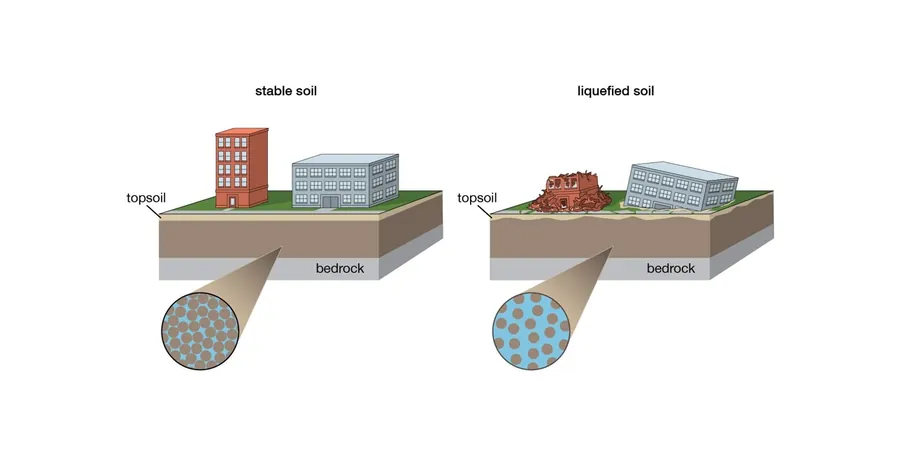
Melbourne's geological setting presents specific challenges that elevate the importance of seismic services. Much of the metropolitan area is underlain by Quaternary basalts, particularly the Newer Volcanics in the western suburbs, alongside deep alluvial deposits and Silurian siltstones in the east. The Yarra River delta features significant soft clay layers and saturated sands that can amplify ground motion and introduce secondary hazards. These variable ground conditions mean that a uniform seismic hazard assumption is insufficient; site-specific analysis is essential. A key concern in these environments is the potential for soil liquefaction analysis to identify layers where cyclic loading could cause a sudden loss of soil strength, transforming solid ground into a fluid-like mass and devastating foundations.
The regulatory framework governing seismic design in Melbourne is anchored in AS 1170.4:2007 (Structural design actions – Earthquake actions in Australia), which mandates seismic hazard assessments based on a 500-year return period for ordinary structures and more stringent criteria for post-disaster facilities. This standard works in concert with AS 3600 for concrete structures and AS 4100 for steelwork. Critically, the National Construction Code references these standards, making seismic analysis legally binding for new builds and major renovations. The code requires an evaluation of site subsoil class, which directly influences the design acceleration response spectrum. This is where a site response analysis becomes indispensable, as it quantifies how local soil profiles modify bedrock motion, often amplifying acceleration in the period range of typical Melbourne buildings.
The types of projects requiring this category of service are diverse and growing. Tall buildings, particularly those exceeding 70 meters, are subject to dynamic behaviour that demands a detailed understanding of site-specific ground motion. Major infrastructure projects, such as bridges, tunnels, and rail networks, require seismic resilience to maintain operability after an event. Even low- to mid-rise structures on problematic soils, including aged masonry buildings undergoing adaptive reuse, benefit from a thorough seismic assessment. Soil liquefaction analysis is routinely triggered for structures near waterways, ports, and reclaimed lands, while a site response analysis is a prerequisite for performance-based designs that aim to go beyond prescriptive code minimums, ensuring life safety and immediate occupancy objectives are met.
Although Melbourne is not located on a plate boundary, it experiences intraplate earthquakes from faults within the Australian plate, such as the Selwyn Fault. The city's variable geology, including soft clays and basalts, can amplify ground shaking. National construction standards mandate seismic design to protect life and infrastructure against these infrequent but potentially damaging events.
AS 1170.4:2007 is the primary standard governing seismic actions on structures in Australia, including Melbourne. It defines hazard factors for different regions, site subsoil classes, and methods for calculating design earthquake loads. Compliance with this standard is mandatory under the National Construction Code for structural design and material-specific standards like AS 3600.
Melbourne's geology varies significantly, from deep Yarra Delta alluviums to Newer Volcanic basalt flows. Soft soils can amplify seismic waves and increase shaking duration, while saturated sandy layers pose a liquefaction risk. A site-specific assessment is crucial because the underlying ground conditions can dramatically alter the seismic demand on a structure compared to a rock site.
A typical assessment begins with defining the bedrock seismic hazard from AS 1170.4. This is followed by a detailed geotechnical investigation to characterise the soil profile and dynamic properties. A site response analysis then models how seismic waves travel upward through the local soil, producing a surface-level response spectrum that accounts for amplification effects for structural design.