Geotechnicalengineering1
MELBOURNE
HomeFoundationsPile Foundation Design

Pile Foundation Design in Melbourne – Geotechnical Expertise for Deep Foundations

Technical studies that support your project.

LEARN MORE

Our team mobilises a CPT truck and rotary drilling rig across Melbourne to assess ground conditions for deep foundations. We start with continuous cone penetration testing to map soil stratigraphy, then extract undisturbed samples using thin-wall Shelby tubes. Lab work follows immediately — triaxial CU tests, consolidation, and direct shear. For pile foundation design in Melbourne, the critical data comes from end-bearing resistance and shaft friction profiles. We combine this with ensayo CPT logs to define the pile toe depth and skin friction distribution. Every borehole is logged according to AS 1726, and we report SPT N-values at 1.5 m intervals when drilling through granular layers. The final output includes a design soil profile with undrained shear strength (Su), friction angle (phi), and modulus (Es) correlated to the pile type.
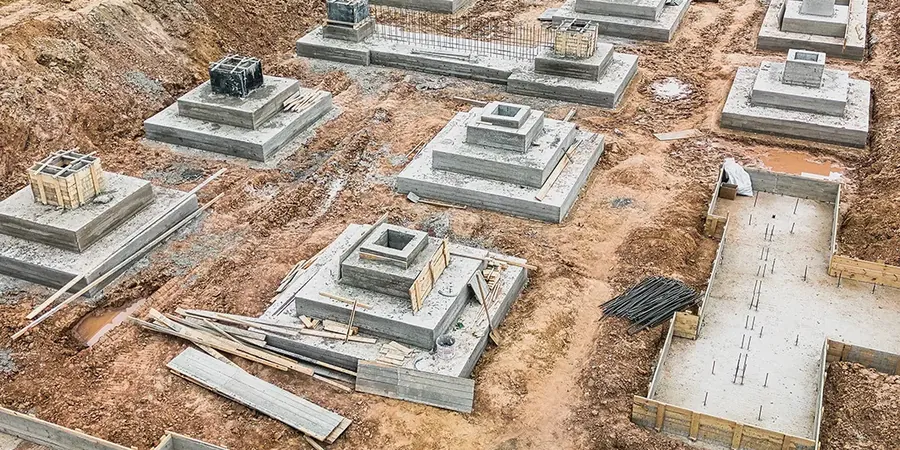
Illustrative image of Pile foundation design in Melbourne
We measure shaft friction and end-bearing directly from CPT logs and triaxial tests, feeding calibrated parameters into the pile design model.

Our service areas

Methodology and scope

In Melbourne, we often see variable alluvial sequences over Silurian mudstone, especially near the Yarra River corridor. The transition from soft clay to stiff bedrock can happen within 3–5 metres, which makes pile foundation design tricky. We always run a presurometro test in the borehole to measure in-situ lateral stress and modulus — this directly feeds into the p-y curve for laterally loaded piles. Our lab then classifies every sample using Atterberg limits and particle size distribution. Key parameters we extract for the design team include:
  • Undrained shear strength (Su) from UU triaxial and pocket penetrometer
  • Effective stress friction angle (phi') from CID triaxial tests
  • Constrained modulus (M) from oedometer consolidation
  • Sensitivity ratio for reworked clays
We cross-check these against the CPT sleeve friction and pore pressure dissipation data to ensure consistency across the site.
Technical reference — Melbourne

Local considerations

A 15-storey residential tower in Southbank required driven precast piles through 8 m of soft clay into underlying basalt. The original design assumed end-bearing only, but our CPT showed a 2 m loose sand layer below the clay — that sand would settle under cyclic loading and reduce shaft friction. We recommended a 300 mm diameter CFA pile socketed 2 diameters into the basalt. Without that adjustment, the building could have experienced 40 mm of differential settlement within five years. That is exactly why pile foundation design in Melbourne must consider the full soil profile, not just the bearing stratum.

Need a geotechnical assessment?

Reply within 24h.

Email: contact@geotechnicalengineering1.vip

Applicable standards

AS 1726 — Geotechnical site investigations, AS 2159 — Piling — Design and installation, AS 1289 — Lateral load testing of piles, FHWA-NHI-05-042 — Design and construction of driven piles

Technical parameters

ParameterTypical value
Undrained shear strength (Su)20–250 kPa (soft clay to stiff clay)
Effective friction angle (phi')28–40 deg (sand to weathered siltstone)
Constrained modulus (M)5–80 MPa (varies with overburden)
SPT N-value (granular layers)8–55 blows/300 mm
CPT cone resistance (qc)1–25 MPa
Sleeve friction (fs)20–200 kPa

Frequently asked questions

What is the typical cost range for a pile foundation design study in Melbourne?

For a standard residential or low-rise commercial project, the geotechnical investigation and design report for pile foundations in Melbourne typically ranges from AU$2,210 to AU$8,350. This includes field drilling, laboratory testing, and a signed design memorandum. Larger or more complex sites may require additional boreholes or specialised testing like PDA, which can increase the total.

How deep do piles usually go in Melbourne's soil conditions?

Depths vary widely. In the CBD and inner suburbs, piles commonly reach 8–15 m to find competent Silurian mudstone or basalt. In outer areas with thicker alluvial sequences, driven piles can go 20–25 m before reaching refusal. Our CPT logs provide the exact depth profile for each site.

What is the difference between end-bearing and friction piles for Melbourne sites?

End-bearing piles transfer load to a strong stratum like rock or dense sand. Friction piles rely on shaft adhesion along the pile length. In Melbourne's clay layers, friction piles often work well if the clay is stiff (Su > 50 kPa), but in soft clay zones end-bearing into basalt is preferred. Our design report recommends the most economical type based on the soil profile.

Do I need a separate geotechnical investigation before pile design?

The reference range for this service in Melbourne is AU$2.210 - AU$8.350. The final price depends on the project scope and volume.

How long does a typical pile design study take from site visit to report?

For a standard suburban site with one borehole, fieldwork takes one day, lab testing takes three to five days, and report writing takes two days. Total turnaround is usually seven to ten working days. For larger developments with multiple boreholes, allow two to three weeks.

Location and service area

We serve projects across Melbourne.

Location and service area