Geotechnicalengineering1
MELBOURNE
HomeSeismicSite Response Analysis

Site Response Analysis in Melbourne

Technical studies that support your project.

LEARN MORE

Our team deploys portable seismographs and a 24-channel geode across Melbourne sites to record ambient noise and shear-wave velocity profiles. We use MASW and ReMi methods to capture Vs30 data down to 30 meters. The equipment runs on deep-cycle batteries and records continuously for up to 48 hours per station. That raw time-series gets processed with Geopsy and SeisImager to extract transfer functions. Before any recording, we survey the site for buried utilities and set up a GPS base station for accurate geolocation. The whole rig fits in a standard ute and takes about half a day to deploy on a typical suburban block. We also coordinate with local council traffic management when sensors go on road shoulders. The result is a site-specific response spectrum that feeds directly into structural design.
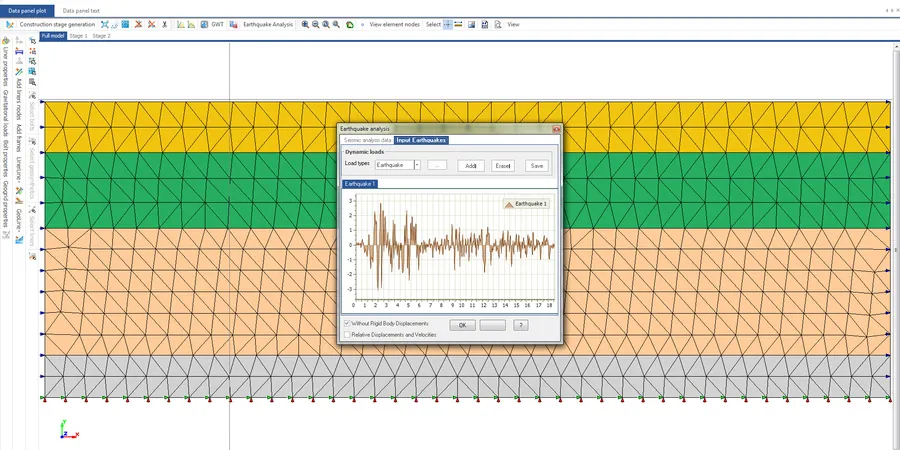
Illustrative image of Site response analysis in Melbourne
A 30% difference in Vs30 can shift the design spectrum by a full site class — that changes the base shear by 40%.
Our service areas

Methodology and scope

We follow AS/NZS 1170.0 and ASCE 7-16 site classification criteria to define the soil profile class. For Melbourne's deep clay sequences in the Yarra delta, that means running both active and passive surface wave surveys. The workflow breaks down like this:
  • Deploy 24 geophones at 2 m spacing for active MASW line
  • Record ambient noise for 60 minutes per array for HVSR
  • Invert dispersion curves using genetic algorithm inversion
  • Output Vs30 and site class (Ae to Ee per AS 1170.4)
When the profile shows soft alluvium we also run a down-hole seismic test to confirm the Vs profile. That data gets combined with a liquefaction assessment when the groundwater table is shallow. For sites near the Mornington Peninsula fault zone we add a masw vs30 survey to capture lateral variability. The final report includes spectral acceleration plots at 5% damping for periods up to 4 seconds.
Technical reference — Melbourne

Local considerations

Melbourne sits on a mix of Silurian mudstone, Tertiary basalt, and Quaternary alluvium. The Coode Island Silt under the CBD is soft, compressible, and up to 40 m thick. That material amplifies long-period waves from distant subduction earthquakes. A magnitude 5.5 event on the Selwyn fault could double the peak ground acceleration at a site with 20 m of soft clay compared to a rock site. We have measured HVSR peaks of 4.5 at sites in Southbank and Docklands. The local councils now require site-specific response analysis for any building taller than 15 m in these zones. Ignoring the amplification can lead to under-designed lateral systems and non-ductile failure modes in a ULS event.

Need a geotechnical assessment?

Reply within 24h.

Email: contact@geotechnicalengineering1.vip

Explanatory video

Applicable standards

AS/NZS 1170.4:2007 (including Amdt 1) – site sub-soil classes Ae to Ee, AS 1726:2017 – geotechnical site investigation, ASCE 7-16 – Chapter 20: Site Classification Procedure, NEHRP Recommended Seismic Provisions (FEMA P-1050) – site response

Technical parameters

ParameterTypical value
Vs30 (m/s)180 – 760 (classes D to B)
Fundamental period T0 (s)0.15 – 1.2
Amplification factor Fa (PGA)1.0 – 1.8
HVSR peak amplitude2 – 6
Depth to bedrock (m)5 – 50
Standard penetration N60 (blows/0.3m)4 – 35

Frequently asked questions

What is the difference between site response analysis and standard Vs30 measurement?

Vs30 gives you a single average shear-wave velocity over the top 30 m, which places the site in a class (Ae to Ee). Site response analysis takes the full Vs profile, the nonlinear soil properties, and the seismic hazard deaggregation to compute a site-specific response spectrum. That spectrum captures amplification at multiple periods, not just the class-based factor. For buildings above 15 m in Melbourne's soft clay zones, the analysis typically yields higher spectral accelerations at periods above 0.8 seconds compared to the code spectrum.

How much does a site response analysis cost in Melbourne?

The typical cost ranges between AU$2,000 and AU$7,150 depending on the number of array locations, the depth of profiling required, and whether down-hole seismic is needed. A single MASW + HVSR array for a small residential block runs around AU$2,000 to AU$3,200. A full study with three arrays plus down-hole validation for a commercial site sits at AU$5,500 to AU$7,150. The price includes fieldwork, inversion, and a signed report.

Do I need site response analysis for a townhouse development in Footscray?

Footscray sits on the Coode Island Silt formation with soft clay extending 15 to 30 m. For a townhouse of three storeys or less, the National Construction Code typically does not require a site-specific analysis. However, if the building uses a soft-storey structural system or the site is within 500 m of a known fault, the building surveyor may request it.

How long does the fieldwork and reporting take?

Fieldwork for a standard single-array MASW survey takes one day. The down-hole seismic test requires a pre-drilled borehole and takes another half day. Data processing and inversion run over two to three days. The final report with design spectra is delivered within five working days after fieldwork. For urgent projects we can prioritise and deliver in three working days at a 20% surcharge.

Location and service area

We serve projects across Melbourne.

Location and service area