Geotechnicalengineering1
MELBOURNE
HomeFoundationsMicropile Design

Micropile Design in Melbourne – Foundation Solutions for Restricted Sites

Technical studies that support your project.

LEARN MORE

In Melbourne, the combination of expansive clays, basalt flows in the west, and soft alluvial deposits along the Yarra River makes subsoil behaviour highly variable. AS 1726 sets the framework for site investigation, but micropile design in Melbourne demands more than just code compliance — it requires understanding how stiff upper crusts overlie compressible layers. Before designing, our team runs a thorough classification of soils to identify collapsible or reactive profiles. This is critical because a micropile that passes through a hard desiccated crust and then sockets into weak siltstone behaves very differently from one embedded entirely in firm clay. We tailor the structural capacity, grout take, and reinforcement to the actual ground conditions encountered, not a generic assumption.
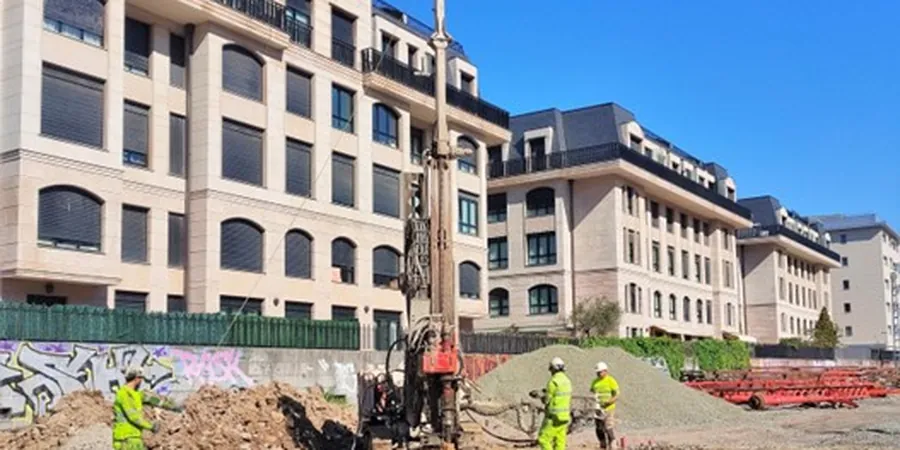
Illustrative image of Micropile design in Melbourne
In Melbourne, a micropile that passes through a hard desiccated crust and sockets into weak siltstone behaves very differently from one embedded entirely in firm clay.

Our service areas

Methodology and scope

One thing we notice repeatedly on Melbourne projects is that the water table fluctuates significantly with seasonal rainfall, especially in suburbs like Footscray and Kensington. During wet months, perched water can soften the upper few metres, reducing shaft friction for micropiles. That is why we always correlate the design with a permeability field test before finalising bond lengths. The main characteristics of our micropile design include:
  • Load transfer verified via static load testing per AS 2159
  • Corrosion protection for aggressive soils (sulfates in Coode Island Silt)
  • Reinforcement bars designed for both compression and tension
We also integrate AS 4678 for earth retaining structures when micropiles are used as underpinning elements adjacent to existing buildings.
Technical reference — Melbourne

Local considerations

Melbourne's notorious shrink-swell clays present a unique risk for micropile design. When the clay dries during summer, negative skin friction can develop on the upper portion of the pile, adding unexpected compressive loads. Conversely, winter wetting can reduce lateral support. Our design accounts for these cyclic moisture changes by isolating the upper active zone with a permanent casing or slip membrane. Ignoring the seasonal movement of the ground surface is the most common cause of micropile failure in Melbourne's inner suburbs. We also assess liquefaction potential in the sandy lenses found beneath Port Melbourne using the NCEER (Youd-Idriss) method.

Need a geotechnical assessment?

Reply within 24h.

Email: contact@geotechnicalengineering1.vip

Applicable standards

AS 2159-2009 Piling – Design and installation, AS 1726-2017 Geotechnical site investigations, AS 4678-2002 Earth retaining structures, Eurocode 7 (EN 1997-1:2004) – Geotechnical design

Technical parameters

ParameterTypical value
Design standardAS 2159, Eurocode 7 (EN 1997-1:2004)
Typical pile diameter150 – 300 mm
Working load range200 kN – 1,200 kN per pile
Grout compressive strength (28 d)30 – 50 MPa
Corrosion protection classClass 2 (AS 2159) for Coode Island Silt

Frequently asked questions

What is the typical cost range for micropile design in Melbourne?

The cost of micropile design in Melbourne typically ranges from AU$2,490 to AU$7,050 depending on the number of piles, site access constraints, and the complexity of ground conditions. For a standard residential underpinning project with 6–10 piles, expect the lower end of this range. Larger commercial projects with load testing and detailed reports fall at the higher end. Contact us for a project-specific quotation.

How deep do micropiles need to be in Melbourne clays?

Depth depends on the thickness of the active clay zone and the required load-bearing strata. In Melbourne, the active zone typically extends 3–5 m below ground level in areas like Brighton or Hawthorn. Micropiles must extend below this zone into the underlying firm clay or siltstone to avoid seasonal movement. We use AS 1726 methods to determine the design depth from borehole data.

Can micropiles be used in Coode Island Silt?

Yes, but special considerations apply. Coode Island Silt is soft, compressible, and has high sulfate content. Micropile design for this material requires sulfate-resistant cement (Type SR), a permanent steel casing to maintain borehole stability, and careful assessment of negative skin friction. Grouting pressure must be controlled to avoid fracturing the surrounding silt. We have designed several successful micropile foundations in Docklands and Southbank using these measures.

What load testing is required for micropiles in Melbourne?

AS 2159 requires proof testing on at least 1% of production piles, with a minimum of one test per project. We typically perform maintained-load static tests up to 1.5 times the design working load. For micropiles, the test must be carried out after the grout has reached 28-day strength. In sensitive sites near existing buildings, we also recommend dynamic load testing as a cost-effective alternative, provided the pile geometry permits it.

Location and service area

We serve projects across Melbourne.

Location and service area