Geotechnicalengineering1
MELBOURNE
HomeLaboratoryCaracterización de suelos residuales

Residual Soil Characterization in Melbourne: Understanding the Ground Beneath You

Technical studies that support your project.

LEARN MORE

The difference between building on the deep basaltic clays of Doncaster versus the weathered sandstone profiles of the Yarra Valley is like night and day. In Melbourne, residual soils dominate across the eastern and northern suburbs, where the parent rock has decomposed in place over millennia. These soils behave nothing like transported alluvium — they often retain relict jointing and fabric from the original rock, which can dramatically alter bearing capacity and drainage. That's why we treat every site as a distinct geological problem. Our approach to residual soil characterization in Melbourne starts with understanding the specific weathering profile, from the upper horizon of completely decomposed material down to slightly weathered bedrock. Complementing this with a resistivity survey helps us map lateral variability in the weathering front without drilling every meter.
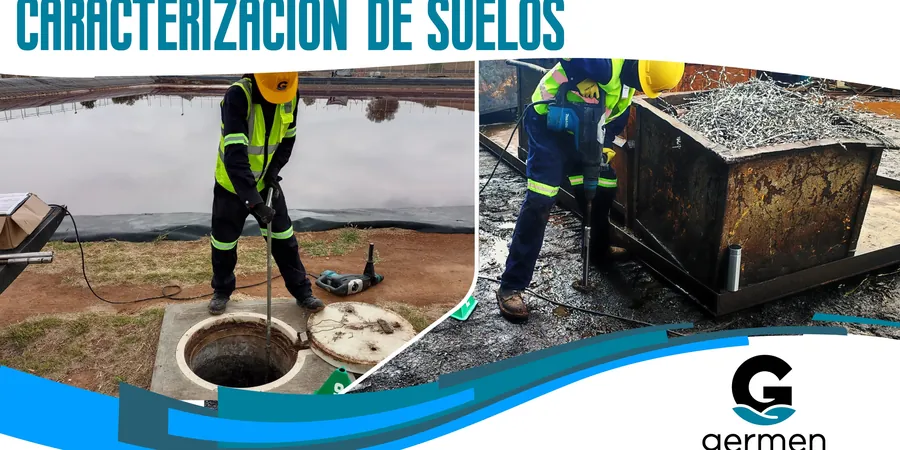
Illustrative image of Residual soil characterization in Melbourne
Residual soils retain the structural legacy of the parent rock; a fact that can either stabilize or undermine a foundation depending on how it is characterized.
Our service areas

Methodology and scope

AS 1726:2017 is the governing standard for geotechnical investigations in Australia, and it sets clear requirements for the description and classification of residual soils. In Melbourne's context, this standard is especially relevant because the weathering profiles here can be highly variable over short distances. A site in Blackburn may have 12 meters of silty clay derived from Silurian mudstone, while a site just 2 km away in Box Hill might hit fresh rock at 4 meters. Our team follows the standard's weathering classification system — residual soil, completely weathered, highly weathered, moderately weathered, slightly weathered — to assign consistent engineering properties. We also routinely perform Atterberg limits on the fine fraction to assess plasticity and shrink-swell potential, a common issue in Melbourne's clay-rich residual profiles. The combination of field logging and laboratory index testing gives us a reliable basis for foundation recommendations.
Technical reference — Melbourne

Local considerations

Melbourne sits on a complex basement of Silurian mudstone and sandstone, with Quaternary basalt flows capping large areas in the west. The residual soils derived from these rocks are often highly reactive to moisture changes — a direct consequence of the clay mineralogy produced during weathering. During wet La Niña cycles, we've seen foundation heave in residual clays that exceeded 40 mm in parts of Kew and Hawthorn. Conversely, extended dry periods cause significant shrinkage and differential settlement. This cyclic behavior is the primary risk when residual soils are not properly characterized. Our field program always includes seasonal moisture monitoring and determination of the soil's activity ratio (Skempton's A) to quantify the shrink-swell hazard before any footing design begins.

Need a geotechnical assessment?

Reply within 24h.

Email: contact@geotechnicalengineering1.vip

Applicable standards

AS 1726:2017 — Geotechnical site investigations, AS 2870:2011 — Residential slabs and footings (reactive soil classification), AS 1289.3.2.1 — Atterberg limits determination

Technical parameters

ParameterTypical value
Thickness of residual soil profile2–15 m typical for eastern suburbs
In situ moisture content18–45% depending on season and clay fraction
Plasticity Index (PI)20–55 for clay-rich residual soils
SPT N-value range (residual clay)8–30 blows/300 mm
Degree of weathering (AS 1726)Residual soil to completely weathered
pH (corrosivity potential)5.0–7.5 typical profile

Frequently asked questions

What is the difference between residual soil and transported soil in Melbourne?

Residual soil forms in place from the chemical and physical weathering of underlying bedrock, so it retains relict fabric and structure from the parent rock. Transported soil, like the alluvial clays along the Maribyrnong River, has been moved and re-deposited by water or wind, losing that inherited structure. This distinction matters for foundation design because residual soils often have anisotropic strength and variable permeability that transported soils do not.

How much does residual soil characterization in Melbourne typically cost?

For a standard residential block, the cost ranges between AU$1,150 and AU$5,180 depending on the number of boreholes, depth of investigation, and laboratory testing required. This typically includes field logging, index testing, and a written geotechnical report. Larger commercial projects with deeper profiles and more extensive lab work fall at the upper end of that range.

Which Melbourne suburbs have the deepest residual soil profiles?

The eastern suburbs including Doncaster, Box Hill, Blackburn, and parts of the Yarra Valley commonly show residual soil profiles extending 8 to 15 meters before reaching moderately weathered rock. The basaltic areas to the west, such as Werribee and Point Cook, tend to have shallower profiles (2–5 m) over fresh basalt. Suburbs like Kew and Hawthorn on Silurian mudstone can have highly variable depths due to ancient erosion surfaces.

Location and service area

We serve projects across Melbourne.

Location and service area

Explanatory video