Geotechnicalengineering1
MELBOURNE
HomeLaboratoryEnsayo CBR de laboratorio

Laboratory CBR Test in Melbourne for Subgrade Strength Evaluation

Technical studies that support your project.

LEARN MORE

Clay in the inner suburbs of Melbourne behaves very differently from the sandy gravels found on the northern fringe. That contrast makes a general soil classification insufficient for pavement design. Our laboratory CBR test measures the soaked bearing capacity of compacted samples under controlled conditions. We run the test on material passing the 19 mm sieve, compacted to standard or modified Proctor effort before soaking for 96 hours. The plunger penetration at 2.54 mm gives the CBR value used in flexible pavement thickness charts. For subgrades with high fines content, we also check swell after the soaking period. This data feeds directly into the Austroads pavement design procedure. Before sampling, it pays to run a granulometría to confirm the fraction below 19 mm is representative.
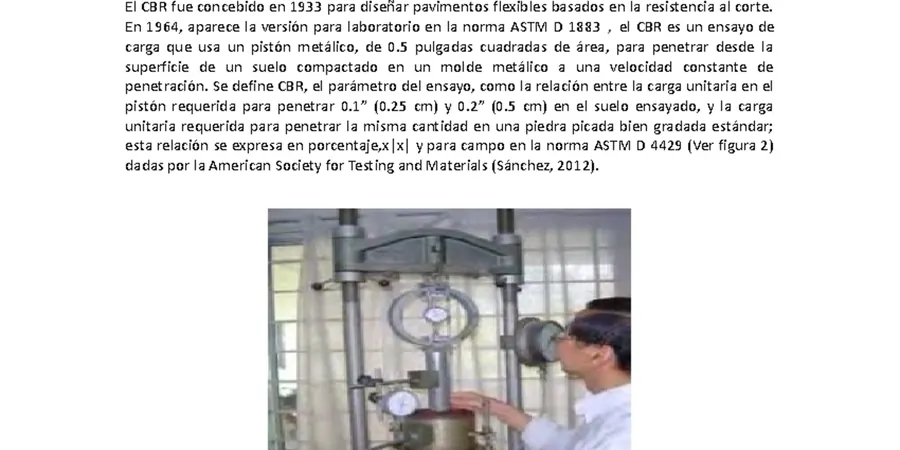
Illustrative image of Laboratory CBR test in Melbourne
A soaked CBR below 2 % in Melbourne's plastic clays signals high swell potential and requires subgrade improvement before pavement placement.
Our service areas

Methodology and scope

Melbourne's geology includes Quaternary basalts, Silurian mudstones, and alluvial terraces along the Yarra River. Each parent material produces a different compaction response and soaked CBR. The laboratory CBR test in Melbourne follows AS 1289.6.1.1-2014, which specifies compaction in a 152 mm diameter mould, with surcharge weights and a penetration rate of 1 mm/min. We report values at 2.54 mm and 5.08 mm penetration, taking the lower result. For projects requiring unsoaked conditions — common in arid or well-drained sites — we run the test without the 96-hour soak. The results correlate well with field plate load tests, but the lab test gives a controlled, repeatable baseline for pavement design. When dealing with soft subgrades, we often pair this with a placa-de-carga to verify field modulus of reaction (k-value) for rigid pavement design.
Technical reference — Melbourne

Local considerations

A road widening project on the eastern suburbs of Melbourne hit a layer of highly plastic clay with a soaked CBR of 1.5 %. The design assumed a CBR of 5 % based on historical classification alone. Without a proper laboratory CBR test, the pavement failed within two years — longitudinal cracking and edge break appeared after the first wet season. That scenario repeats across Melbourne's basalt-derived soils. The laboratory CBR test catches those low values before construction. It also quantifies the swell pressure that can heave a pavement 30 mm or more. Relying on correlation tables instead of testing is the quickest way to underspend on pavement depth and pay for it in rehabilitation costs.

Need a geotechnical assessment?

Reply within 24h.

Email: contact@geotechnicalengineering1.vip

Applicable standards

AS 1289.6.1.1-2014: Determination of the California Bearing Ratio of a soil — Standard laboratory method for a remoulded specimen, AS 1289.5.1.1-2017: Compaction control test — Dry density ratio, moisture ratio and relative compaction, Austroads Guide to Pavement Technology Part 2: Pavement Structural Design (AGPT02-17)

Technical parameters

ParameterTypical value
Compaction mould diameter152.4 mm
Compactive effortStandard Proctor (596 kJ/m³) or Modified (2703 kJ/m³)
Soaking period96 hours (4 days)
Surcharge mass4.54 kg (2.27 kg per side)
Penetration rate1.0 mm/min
Reporting valuesCBR at 2.54 mm and 5.08 mm; lower value taken
Maximum particle size19 mm (oversize correction per AS 1289.6.1.1)

Frequently asked questions

What is the difference between soaked and unsoaked CBR test in Melbourne?

The soaked CBR test simulates worst-case moisture conditions after 96 hours of water immersion, including measurement of swell. The unsoaked test skips the soak phase and is faster — results in 24 hours. For Melbourne's expansive clays, the soaked value is usually 30-50 % lower than the unsoaked value, so pavement design must use the soaked result.

How much does a laboratory CBR test cost in Melbourne?

The cost for a standard soaked CBR test (AS 1289.6.1.1) ranges between AU$180 and AU$280 per sample, including compaction, 96-hour soak, swell measurement, and penetration testing. Unsoaked tests are typically AU$120 to AU$180. Volume discounts apply for multi-sample projects.

Can I use CBR values from the US or UK for Melbourne subgrades?

No. CBR is a site-specific property that depends on parent geology, compaction effort, and moisture regime. Melbourne's basalt-derived clays (CBR 1-4 %) behave differently from glacial tills in the UK or alluvial soils in the US. Using foreign correlation tables can lead to under-designed pavements. Test locally.

Location and service area

We serve projects across Melbourne.

Location and service area